Traffic signs’ plating and road markings
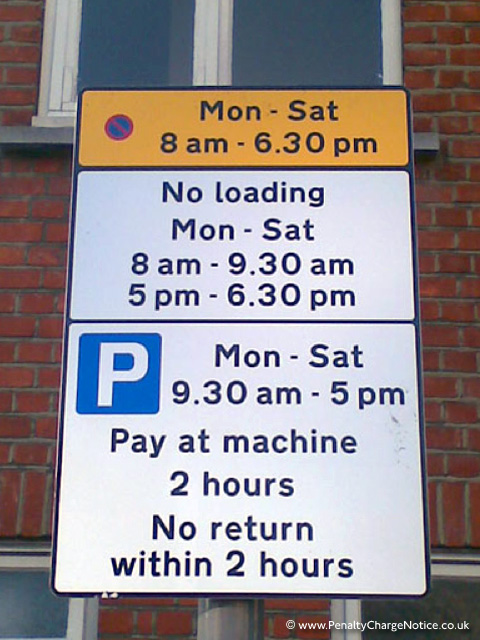
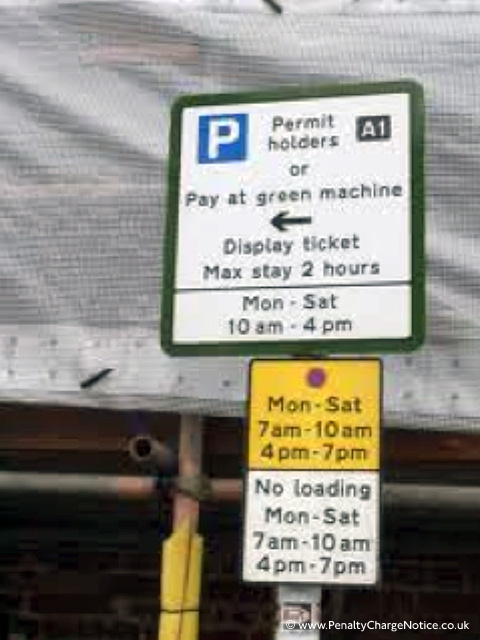
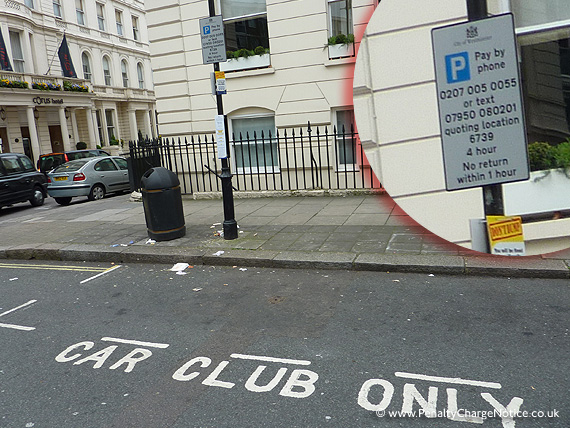
One of the main complaints that we receive is that of incorrect missing or indeed inadequate signage. The government has recognised this too. Many appeals are won on the basis of incorrect markings or signage. Quite simply restrictions are legally unenforceable if the signs are missing, incorrect, wrongly orientated obscured or not on both sides of the road. Likewise missing, faded or incorrect road markings make restrictions unenforceable.
Details of the signs and lines required for all contraventions are set out on the individual pages for each contravention.
The statutory guidance issued to all local authorities by the department of transport in March 2008 states:-
Clause 2.12:
“The restrictions need to be made clear to motorists through appropriate and legal traffic signs and road markings.”
“A flawed or inadequately signed order may be unenforceable and can significantly damage both the aims of enforcement and the public perception of its management."
Clause 8.35 states:
”Authorities should not use PCNs when traffic signs or road markings are incorrect, missing or not in accordance with the TRO. These circumstances may make the order unenforceable. If a representation against the PCN shows that a traffic sign or road marking was defective, the authority should accept the representation because the adjudicator is likely to uphold any appeal. An enforcement authority may be acting unlawfully and may damage its reputation if it continues to issue PCNs that it knows to be unenforceable”.
Clause E2:
PCNs may not be valid if they are issued where traffic signs and road markings are incorrect or in poor condition. Representations demonstrating this should be accepted. If such representations are not accepted, any subsequent appeal may be successful. Authorities should, therefore, have the services of an employee or contractor who is capable of reading and applying TSRGD 2002 and the Traffic Signs Manual. When the Institute of Highway Engineers (IHIE) qualification in traffic sign design is in place, the employee or contractor should have achieved at least ‘practitioner’ level.
Controlled parking Zones (CPZ’S)
There must be clear roadside signage at the point of parking. (within 15 meters) However by allocating an area as a controlled parking Zone a local authority does not need to install roadside signage on single yellow lines. (there is no requirement to install roadside signage on double yellow lines as these always apply “at any time” unless indicated otherwise with signage).
Controlled parking zones must have controlled zone signs on both sides of the road at all entry points and the signs should not be installed close to junctions where motorists attention will be elsewhere. Many councils including Westminster in London do not signpost their zones correctly. This is disgraceful and leads to many tickets being issued when they shouldn’t be and many motorists are being penalised illegally. Quite often CPZ signs are missing and they are nearly always situated at junctions and even on busy roundabouts. Many motorists forget which zone they are in even if the signs do comply as some zones are incredibly large. The guidance seeks to address this by stating that a CPZ should not be larger than 12 streets.
Clause E5
The Secretary of State's view is that motorists cannot reasonably be expected to read, understand and remember the parking restrictions at the entrance to a Controlled Parking Zone that covers an area of more than a dozen streets. CPZs rely solely on zone entry signs to give times of operation and to remove the need for time plates within the zone, except on lengths of road where the restrictions apply at different times to the rest of the zone. The area of a CPZ should, therefore, be restricted to, for example, a town centre shopping area.
A single zone covering a whole town, or suburb of a conurbation, would be much too large. Conventional time plate signing, without zone entry signs, should accompany the yellow sign markings where large areas have waiting restrictions. Time plates are not necessary where there are double yellow lines.
E6
Where CPZ (or Restricted Parking Zone – RPZ – where authorised) signing is to be used, care should be taken when siting the zone entry signs to ensure that they are clearly and safely visible to motorists. Unless unavoidable, they should not be close to junctions on busy roads, where motorists are likely to be concentrating on direction signs, traffic lights and other directional manoeuvring. Locations where the zone entry signs are likely to be obscured by large vehicles (for example, delivery vans, or buses at bus stops) should also be avoided. Local authorities will also need to ensure that they do not become obscured by vegetation or street furniture, including other traffic signs.